
Initiatory Thresholds of Sourcekeeping
A Map for Soul-Led Becoming


Overview
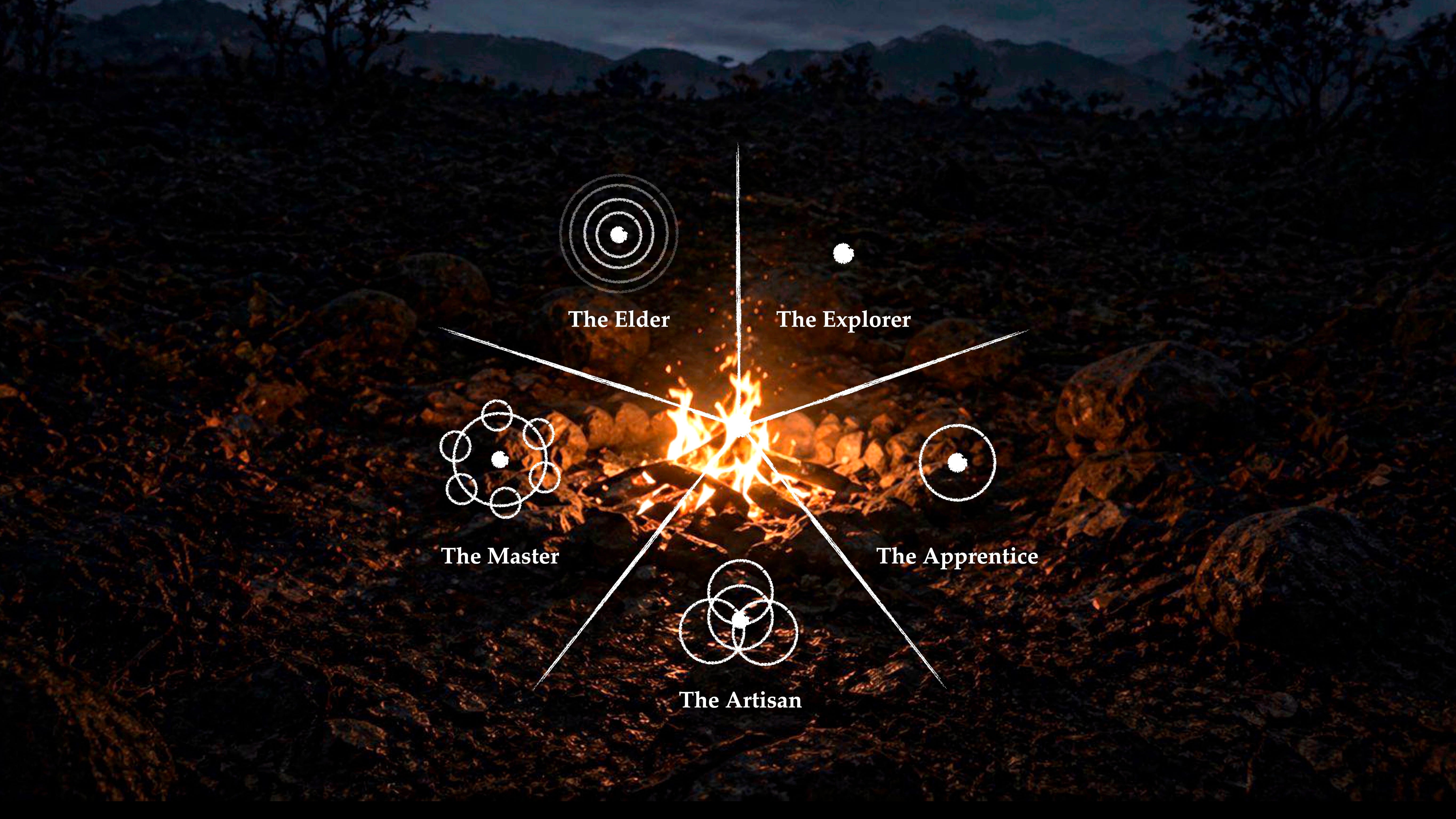
Sourcekeeping can be viewed as unfolding through distinct initiatory thresholds — passages of becoming that deepen our relationship with soul and our capacity for offering our gifts in the world. These are not rigid stages rather living movements, ecological waves we pass through at different scales and depths throughout our lives, yet also with a distinct developmental trajectory. Each threshold represents a metamorphosis, a crossing from one soul territory into another.
As Rob Burbea might say, this is a way of seeing — a construction of the mind, empty in itself, but one we offer with care in hopes it can be meaningful and supportive. It is not a universal law nor an objective description of reality. It is a frame to try on, to see what resonates, to soak up what serves and leave the rest. The invitation is to hold it lightly enough to play with and seriously enough to let it move your soul.
An important note: This model is inspired by and adapted from Bill Plotkin’s Eco-Soulcentric Developmental Wheel. We changed much of the terminology and reframed some of the “threshold” descriptions in attempt to best support metamodern sourcekeepers. We strongly encourage folks to read Plotkin’s magnum opus for a deeper dive!
Four members of the Sourcekeepers Guild joined for a rich dialogue on the model, including personal stories from our own threshold crossings. Watch below!
Where This Map Begins
This is not a map of the whole human journey. It begins at the threshold of what Richard Rohr calls “the second half of life” — the turn from building a personal identity in the world toward discovering a deeper ground of being. In the first half of life, we often orient toward belonging, individual success, and the development of a healthy psychological self. This work is essential and beautiful, and often never ends.
At some point — through loss, through a growing emptiness, through a crack in the life we built — something else begins to stir. There is a deeper layer of identity that our schools, careers, and conventional culture often never prepare us for. This map begins at that recognition.
What We Mean by “Soul”
Soul is one of those words that carries many diverse interpretations. We want to be specific about how we’re using it.
We are not primarily speaking of soul as a metaphysical entity that incarnates across multiple lifetimes. That may be true, and many traditions hold it so, but it’s not what this map is tracking. This is about something more immediate: the deepest heart of our unique expression, fully incarnated in this one life, in the contexts of this particular time, as a way of being in service to the whole.
Soul work, then, is the process of coming into living relationship with this one wild and precious life, and allowing it to unfold — through our bodies, our relationships, our creative work, and our devotion — into this world as our unique offering of love.
A Distinct Territory
One important caveat before diving in: this map is tracking a different territory than many of the developmental models that may be familiar to readers in the integral, metamodern, or contemplative worlds.
Integral Theory maps worldviews and cultural evolution. Stages models (Kegan, Cook-Greuter, O’Fallon) map ego development and meaning-making complexity. Awakening maps track states of consciousness and nondual awareness. Each of these is valuable and important.
This map tracks something else: the unfolding of soul’s unique expression across a lifetime. It is a depth dimension that runs alongside the others but follows its own logic and timeline. Someone can be at the Explorer phase of soul development and at a highly complex stage of ego development — or vice versa. Similarly, a biological elder can be at the Apprentice or Artisan phase of soul development.
We hold soul development as a distinct line. We encourage readers to resist the temptation to conflate this map with others, or to create a meta-map where everything lines up neatly. These are different ways of seeing, illuminating different territories.
Why a Map Is Helpful Now
In many traditional and indigenous cultures, the passages of soul development were held by elders, structured through initiatory rituals, and embedded in the fabric of community life. A young adult entering the underworld of the Explorer would be recognized, guided, and ceremonially supported through the crossing.
Most of us don’t have that. We are navigating this territory often alone, through the miracle of synchronicity and soul — improvising our initiatory processes from fragments: a book that arrives at the right moment, a therapist who sees us clearly, a retreat that cracks something open, a friend who’s a few steps ahead. We’re often hodgepodging our transformational experiences from pure intuition, luck, grace, and whatever lineage-wisdom we can access.
There can be a hidden gift in this. Being forced to self-initiate without traditional containers can build a faith in life itself, not just in teachers or structures. We may begin to experience life as fundamentally trustworthy. It can also help us relate to others who are without support, which paradoxically can create the very support that is essential for the kind of culture-building this map points toward.
But the absence of maps and containers also means many people get stuck, or lost, or never realize the territory exists at all. This framework is offered in that spirit — as a structure for the unstructuring, a map for a journey that is ultimately unmappable, but that can be illuminated enough to help travelers orient and companions find one another, and to help walk each other home.
The Five Thresholds
1. The Explorer
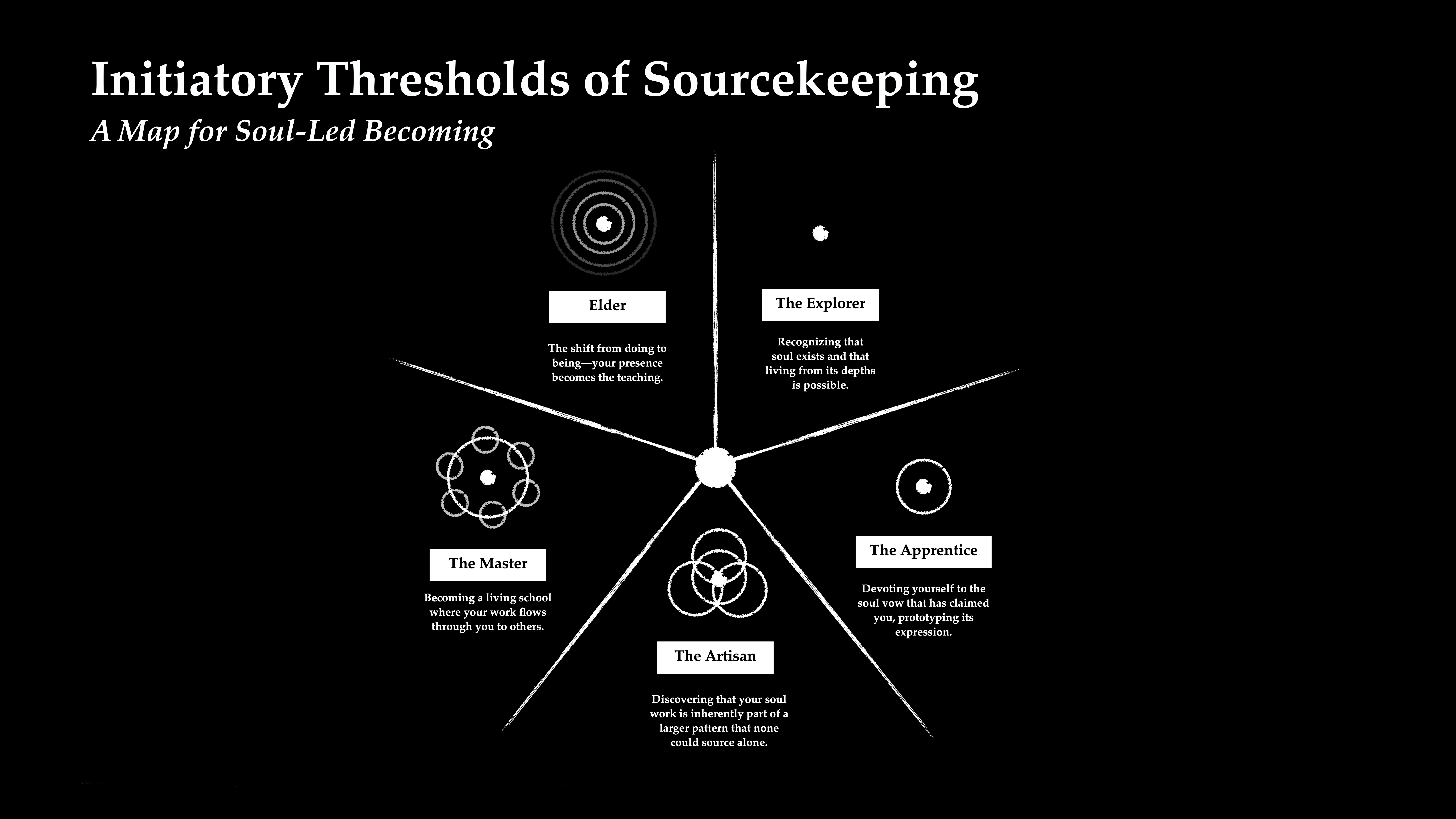
Recognizing that soul exists and that living from its depths is possible.
2. The Apprentice
Devoting yourself to the soul vow that has claimed you, prototyping its expression.
3. The Artisan
Discovering that your soul work is inherently part of a larger pattern that none could source alone.
4. The Master
Becoming a living school where your work flows abundantly through you to others.
5. The Elder
The shift from doing to being — your presence becomes the teaching.
1. THE EXPLORER
Crossing the Threshold into Soul
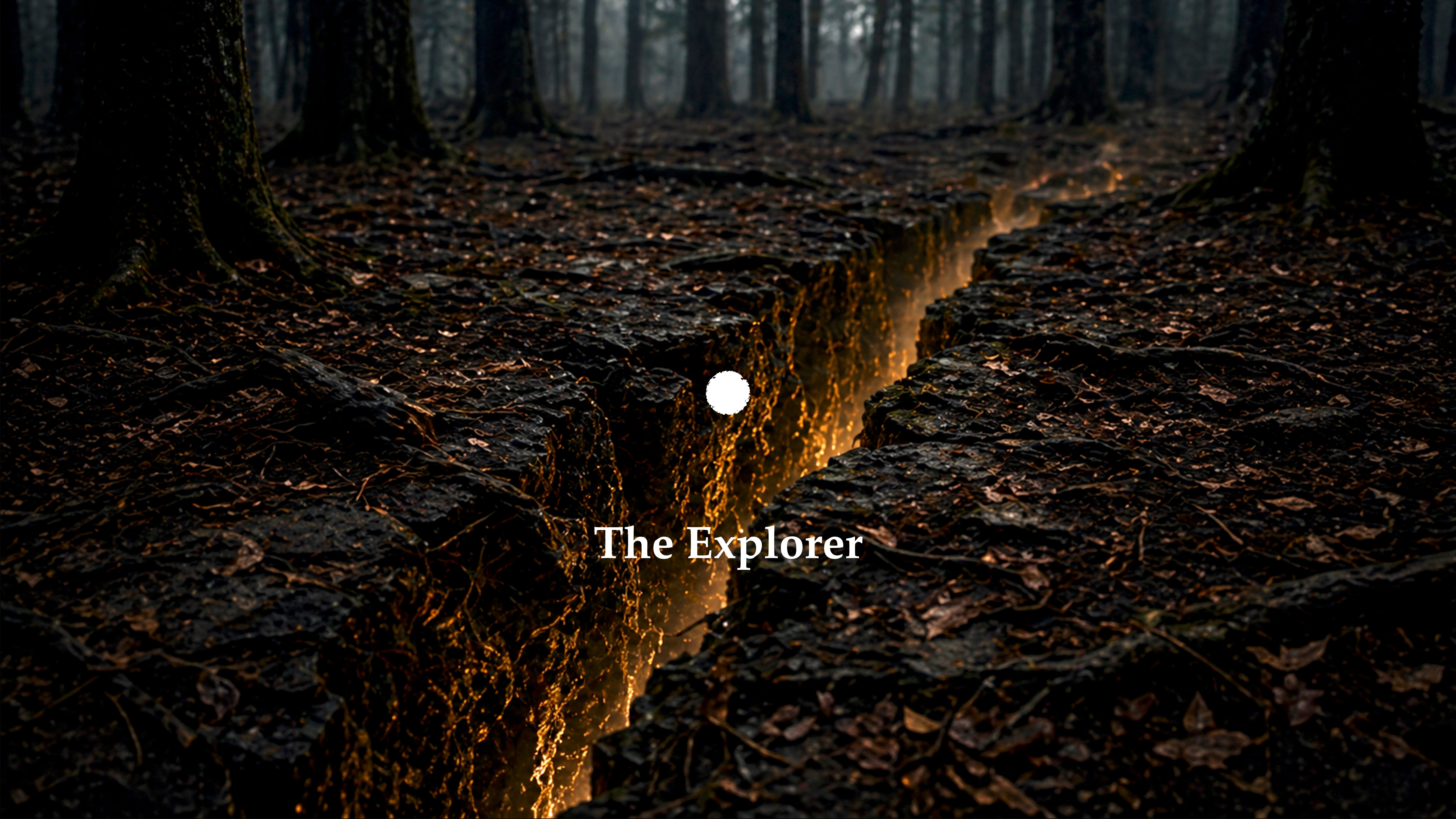
Portrait: She wakes at 3am with a feeling she can’t name — something is calling, but she doesn’t know what. Her life works fine on paper, but there’s a hollow ache underneath, a sense of wearing a costume that used to fit. She’s begun reading strange books, taking walks without destinations, crying at beauty she used to walk past. Something is dying in her, and something else is trying to be born.
The Breakthrough: Recognizing that soul is even possible — that there is a deeper layer of identity beyond personal ambition or societal conditioning. The first crack in the shell. The willingness to not-know who you are.
The Characteristic Question: “Is this real? Is there actually something deeper calling me?”
The Challenge: Total surrender. Becoming caterpillar goo without guarantee of wings. Dying to an old self while having no clear image of what’s emerging. Apprenticing to mystery itself.
The Quality of Time: Liminal time — suspended between worlds. Clock time loses its grip; days blur and stretch. The past self recedes but the future self hasn’t arrived. You live in the threshold itself.
The Embodied Texture: Groundlessness, vertigo, a hollowing out. The body may feel like it’s dissolving or becoming strangely transparent. Waves of grief for no reason. Unexpected tears. A hunger that food doesn’t satisfy. At the same time, the body becomes infrastructure: soul is a more intensive program to run, and it asks for alignment — sleep, food, sunlight, movement, breathing. The body must become a vessel capable of holding what’s trying to come through.
The Companion: Mystery itself, or perhaps a psychopomp figure — the guide who walks between worlds. Dreams become teachers. Synchronicities multiply. The world begins speaking in symbol and myth.
The Unexpected Gift: The sweetness of not-knowing. A porousness to life that achievement had sealed over. The discovery that groundlessness, while terrifying, is also freedom.
The Trap: Staying in perpetual exploration — addicted to the seeking rather than allowing the finding. Using spiritual seeking as avoidance. Never landing, never committing, always “almost ready.” There is also a subtler trap: the imaginal opening that often accompanies the Explorer phase can become an escape from reality rather than a deeper engagement with it. When the world becomes too painful — the news, the losses, the sheer intensity of feeling everything — the imaginal can become a retreat into enchantment rather than a capacity for intimacy with what is. The soul path asks us to develop what might be called a post-tragic metabolic resilience: the capacity to remain intimate with reality, including its suffering, without being overwhelmed or fleeing into fantasy.
The Transition Signal: A deep gnosis of what is yours to do begins to crystallize. Not yet formed, but felt. The vow arises from your depths, unbidden. You stop asking “what should I do?” and start sensing “this is mine to live into.”
2. THE APPRENTICE
Prototyping the Soul’s Offering
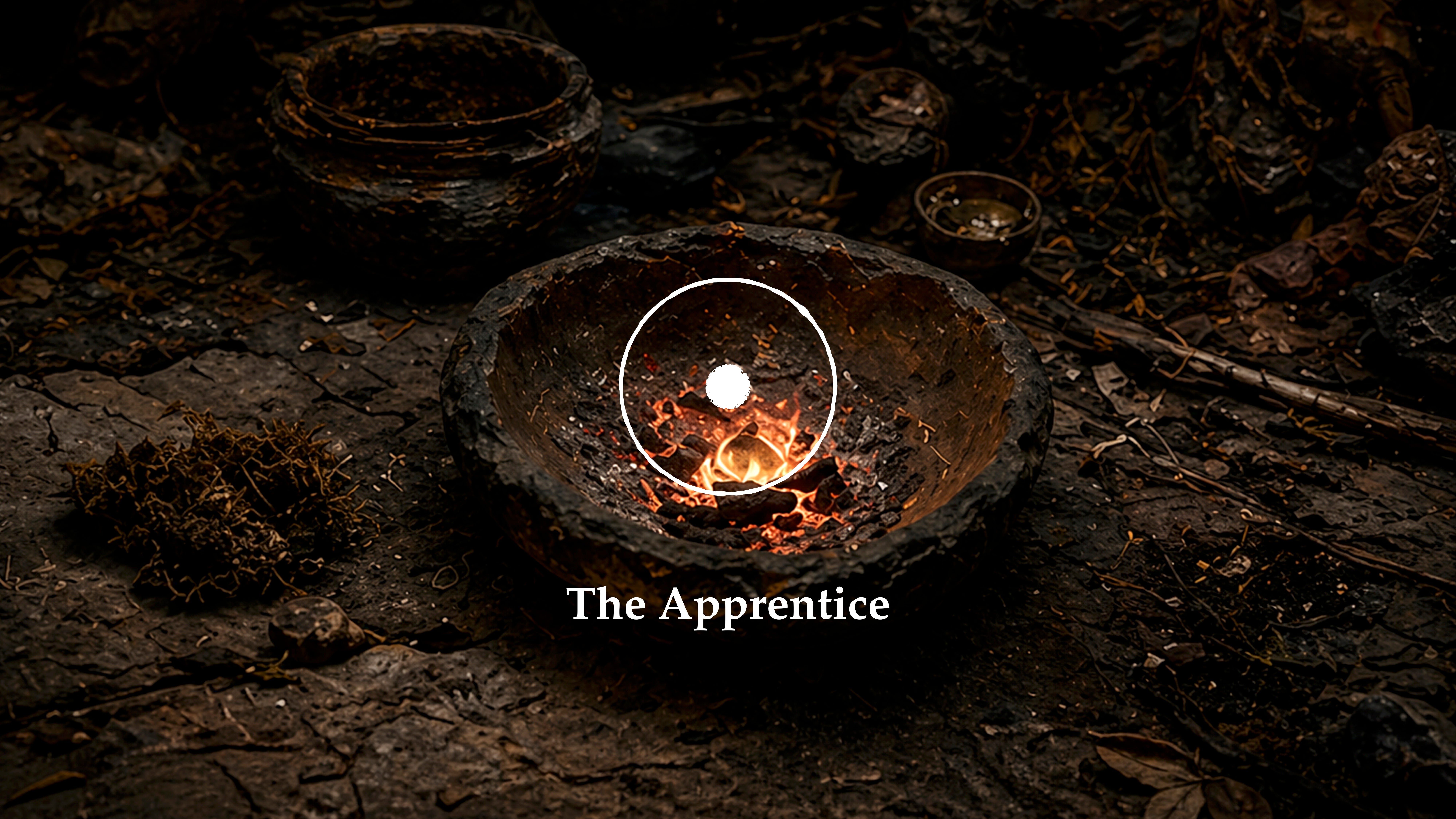
Portrait: He knows his soul’s song now — can feel it humming in his chest like a tuning fork. But he’s clumsy with it, like a musician who can hear the symphony but whose fingers stumble on the keys. He’s practicing, failing, practicing again. His teachers are appearing — books, mentors, collaborators — as if synchronistically magnetized by his commitment. The relationship is mostly still between him and soul, intimate and consuming.
The Breakthrough: Soul Initiation — a one-way crossing that forever changes you. The vow arises not as something you choose but as something that claims you, saturated in mystery yet arriving with clarity. A marriage to mythos. From this union, that which you’re here to source begins to take shape. Moving from “exploring what might be mine” to “devoting myself to what is mine.”
The Characteristic Question: “What does my soul actually want to create through me, and who does it need me to become?”
The Challenge: Devotion without results. Prototyping when no one is watching. Cultivating skills that don’t yet have a form to fill. Staying true to soul when the world doesn’t understand or reward it.
The Quality of Time: Devotional time — daily practice, slow accumulation. The rhythm of showing up again and again. Time measured in iterations, in drafts, in “one more try.” The long game becomes visible.
The Embodied Texture: A tuning fork vibrating in the chest. Hands reaching for something just out of grasp. The body learning new shapes, new capacities. Frustration in the fingers, longing in the belly, clarity flickering in and out.
The Companion: Soul as primary companion — an inner beloved. The mythos itself becomes a living presence you’re in dialogue with. Teachers begin appearing in human form, but the deepest teaching remains the soul-to-self transmission. It’s important to note: the apprenticeship in this phase is to soul itself — not to a teacher, a lineage, or a structure, though all of those may serve the apprenticeship beautifully. If soul expressions comes through the resonant field of a teacher, wonderful — but the teacher is a vessel for the deeper relationship, not a replacement for it.
The Unexpected Gift: Intimacy with your unique soul expression itself. A love affair with the living mystery at your own center. The discovery that the relationship between you and your soul’s work is itself the treasure, not the external results.
The Trap: Staying a perpetual student. Hiding in the apprenticeship — “I’m not ready yet” — to avoid the vulnerability of offering. Over-preparing. Waiting for permission that will never come.
The Transition Signal: A growing hunger for we. The recognition that this work cannot be done alone — that your soul’s offering is inherently relational, ecological, collective, cultural. The loneliness of individual devotion becomes a doorway into a new form of communion.
3. THE ARTISAN
Networked Artists of a New Culture
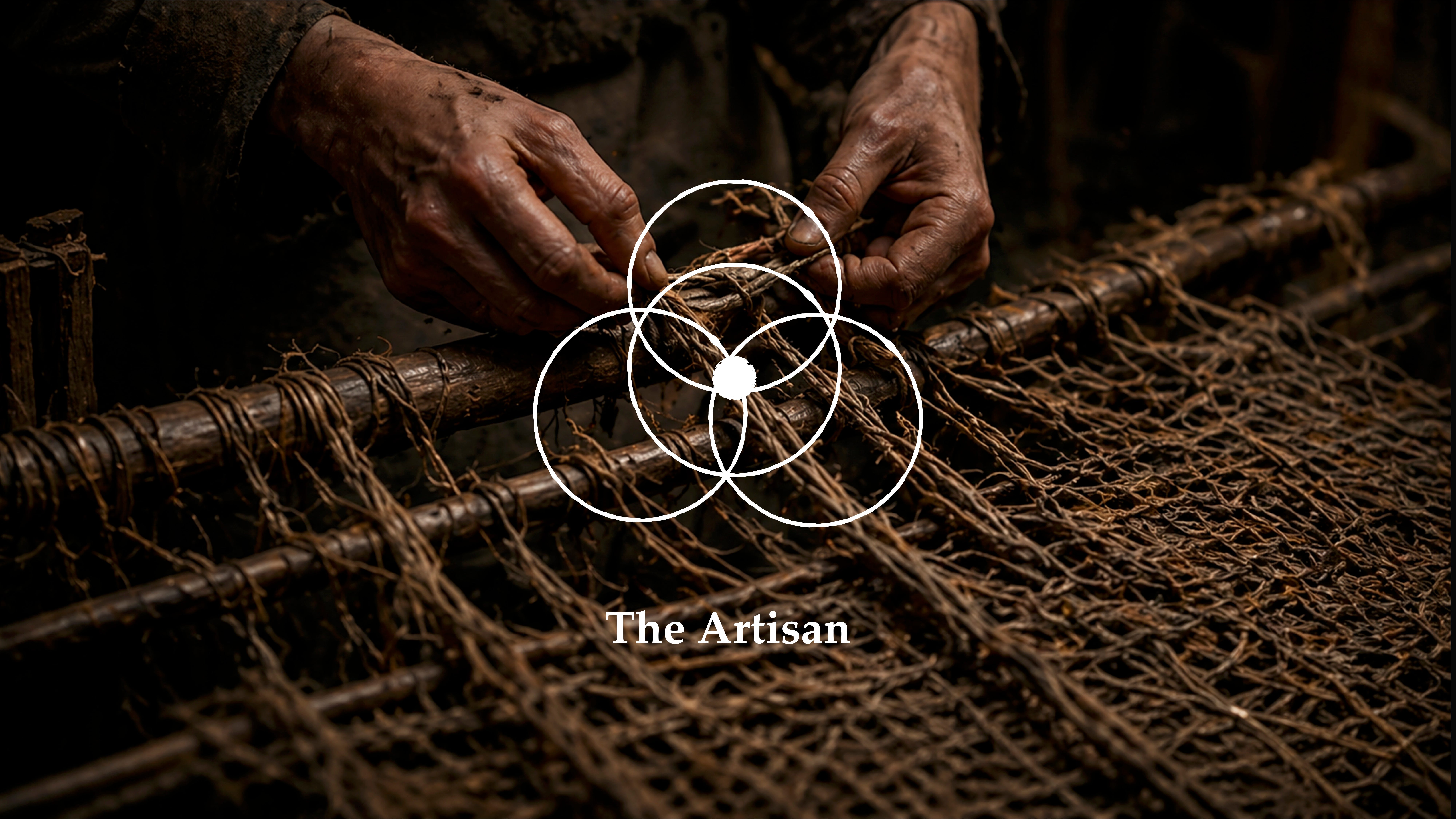
Portrait: She’s no longer just practicing alone in her studio — she’s discovering that her soul work was never meant to stand alone. Her offering has crystallized into forms that can be named: projects, vessels, medicine. But the deeper revelation is where it fits. She’s seeing the larger pattern now — how her symphonic note rings with others’ notes, how Sacred World can only be built through the weaving of multiple soul expressions into coherent wholes. She’s not just collaborating; she’s cohering — finding her place in holons that are larger than any individual could create alone.
The Breakthrough: The recognition that your soul work is fundamentally interdependent on others’ soul work. Not “I need community to support my offering” but “my offering is inherently part of a larger offering that none of us could source alone.” The shift from individual mythos to collective culture-building — seeing how the mandala requires all its pieces. This often arrives through a specific experience: hitting a ceiling. After years of devoted apprenticeship, of giving everything to the work, something can’t get past a limit that isn’t personal but structural. The world the work needs to live in doesn’t yet exist. And then you look out from the top of that ceiling and find others who’ve hit the same one — and the recognition is mutual. The artisan phase begins when the response to that ceiling is not more individual effort but collective world-building, which may come with its own set of communal vows.
The Characteristic Question: “Where does my piece fit in the larger pattern, and how can we collectively flourish?”
The Challenge: Learning to cohere into larger wholes without losing your unique shape. Building structures sturdy enough to serve the emerging culture. Navigating the complexity of genuine interdependence — where your flourishing and others’ flourishing become inseparable.
The Quality of Time: Collective time — coordinating rhythms with others. Your calendar becomes interwoven with others’ calendars. Seasons of intensive collaboration alternate with periods of individual deepening. Time becomes ecological, shared, negotiated.
The Embodied Texture: Weaving — threads pulling through fingers. The body learning to attune to multiple rhythms simultaneously. Expansion in the chest as the “we” comes alive. Sometimes friction, heat, the grind of collaboration. The satisfaction of pieces clicking into place.
The Companion: Peers, co-weavers, fellow artisans. The “We” itself and its “Middle“ becomes a companion — the emergent heartmind-intelligence of the group. You begin to feel the collective body as a living presence with its own wisdom. You are that. We are that.
The Unexpected Gift: The discovery that interdependence multiplies rather than dilutes. That your offering becomes more itself when woven with others — not less. The joy of seeing something emerge that none of you could have created alone.
The Trap: Reducing the collective dimension to mere relationship or support — missing that the world-building itself is the soul work now. Or the inverse: losing the thread of your individual soul calling in the gravitational pull of collective projects. Also: building structures that become ends in themselves rather than developmental vessels for and emanations of Sacred World.
The Transition Signal: Others begin coming to you — not just as collaborators but as students. Your work is reaching people. You find yourself mentoring without having planned to. The focus naturally shifts from building the pattern to transmitting the pattern.
4. THE MASTER
Teacher, Mentor, Master Craftsperson
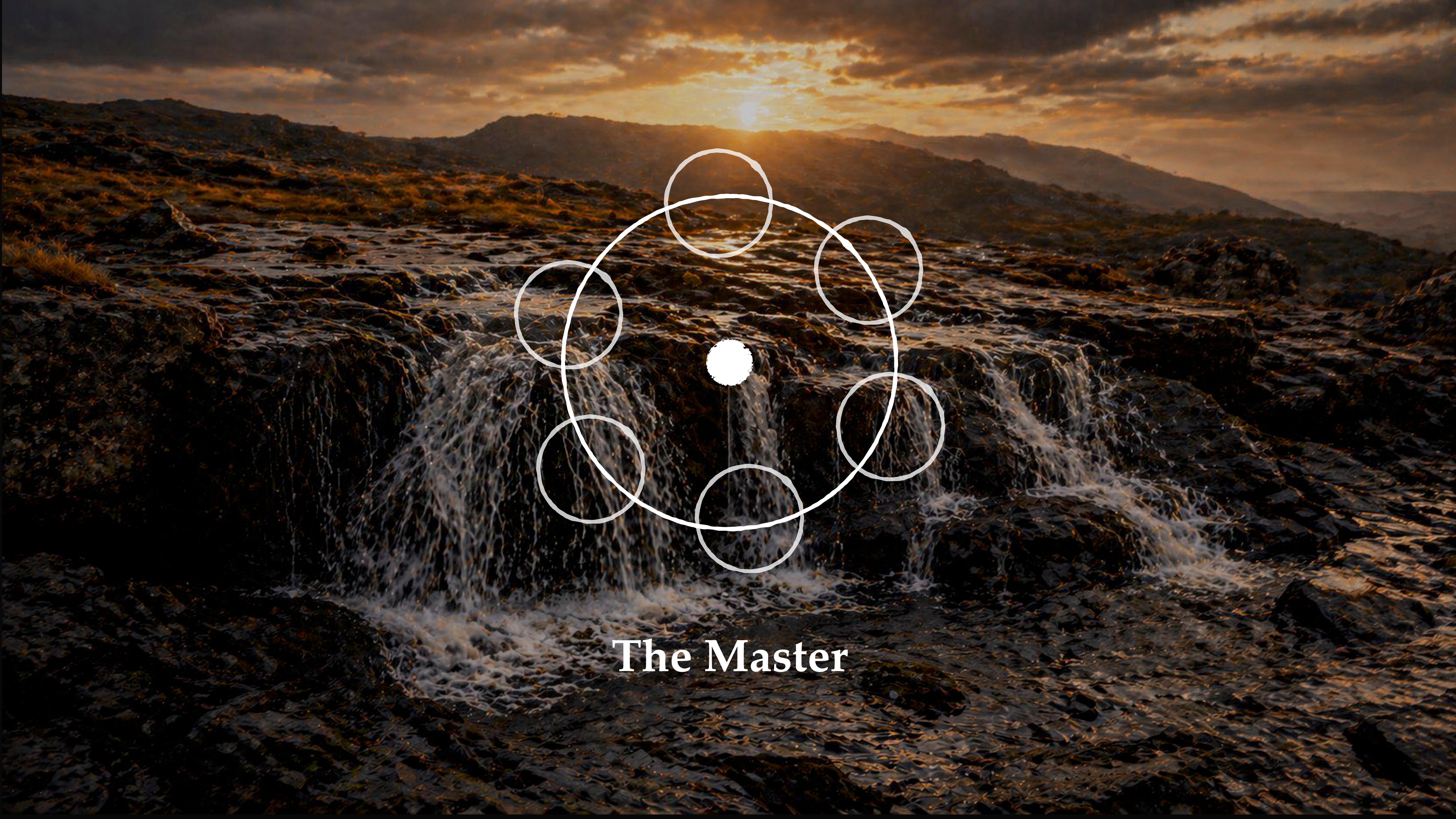
Portrait: His offering has flowered fully — it reaches people, changes lives, has its own momentum. But increasingly, his attention moves from the work itself to those learning from it. He’s becoming a living school. Every conversation is teaching; every project creates space for others to develop. He holds two currents simultaneously: his own continued practice, and the space for others to grow.
The Breakthrough: The work becomes transmission. Full flourishing of soul expression — actualized, manifested, impacting. The shift from “doing my work” to “being a vessel through which work flows to others.”
The Characteristic Question: “How do I give fully without depleting — and receive while giving?”
The Challenge: The dual focus — maintaining your own practice and depth while genuinely creating space for others. Not collapsing into the teacher role. Staying a student yourself.
The Quality of Time: Generational time — thinking in terms of who comes next. Your horizon extends beyond your own life. You begin to feel the weight and gift of lineage, of being a link in a chain that extends both backward and forward.
The Embodied Texture: A vessel overflowing. The body as channel, as conduit. Sometimes the exhaustion of pouring out; sometimes the surprising replenishment of transmission received. Hands that know what to do before the mind decides. The gravity of presence.
The Companion: Students who become mirrors. Those you mentor reflect back dimensions of yourself you couldn’t see alone. The lineage itself — ancestors of your craft and those who will carry it forward — becomes a felt presence.
The Unexpected Gift: The discovery that you receive as much as you give — that teaching deepens your own understanding in ways solitary practice never could. Your students become your teachers. The transmission flows both ways.
The Trap: Guru complex. Believing your own mythology at the expense of others. Creating dependency rather than empowerment. Holding on too long to forms that need to die. Also: burnout from giving without receiving.
The Transition Signal: A loosening grip on the doing. The realization that your presence itself teaches more than your programs. A desire to step back, to let the next generation lead. The work continues without you driving it.
5. THE ELDER
Wisdom Keeper & Transmission
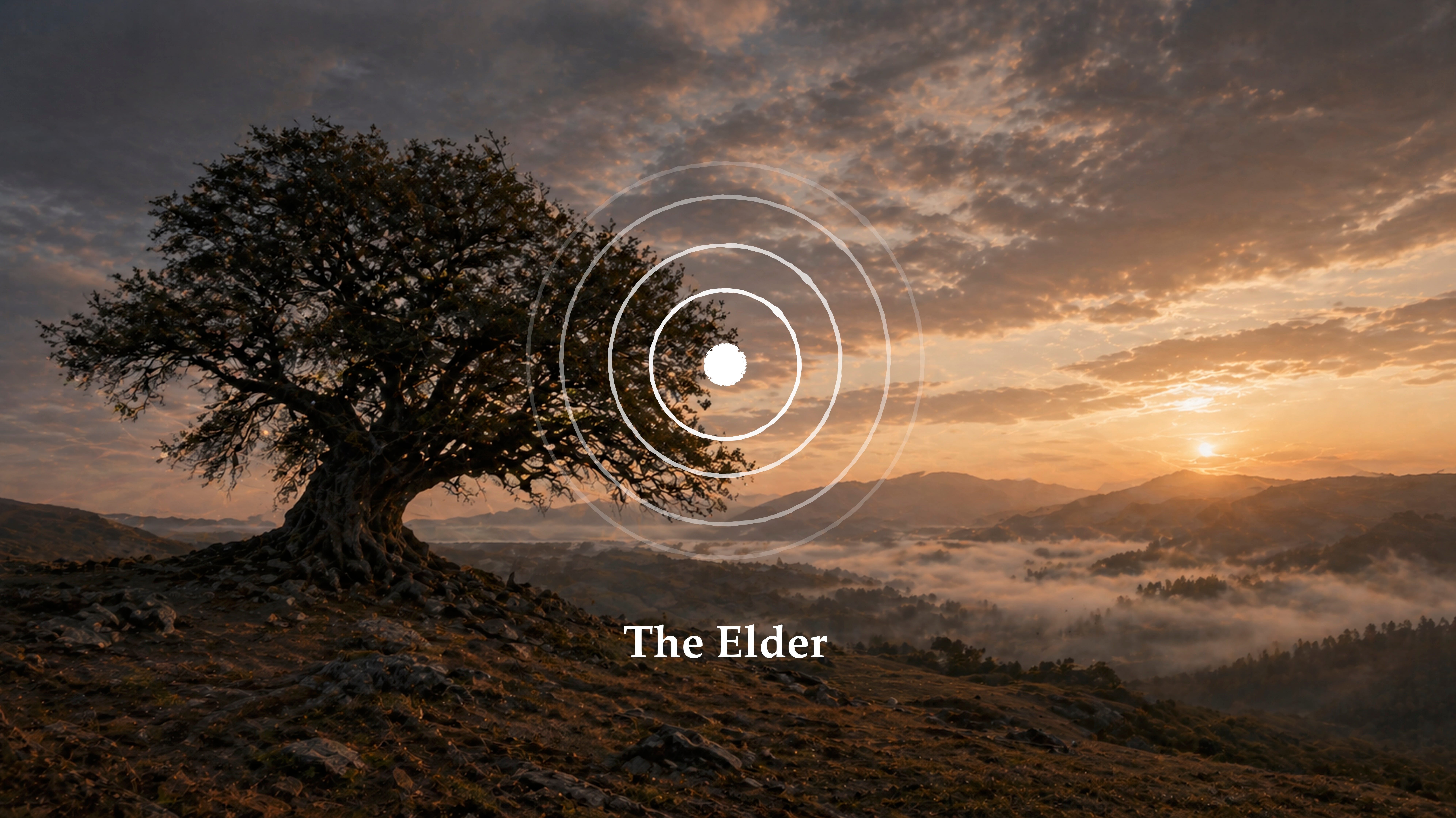
Portrait: She does less now, but her presence does more. She’s released her work into the world — it lives in others, in structures, in culture. Her role is witnessing, blessing, occasionally course-correcting. She holds the long memory and the long view. When masters and artisans come to her with their struggles, she doesn’t fix — she reflects back their own wisdom. She keeps them honest. She holds them accountable to their vows.
The Breakthrough: The shift from doing to being. Releasing the need to produce, create, drive. Trusting that the transmission is complete enough to live without constant tending.
The Characteristic Question: “What must I release so others can fully step in?”
The Challenge: Staying engaged without controlling. Witnessing without fixing. Holding accountability without judgment. Being willing to be forgotten, surpassed, rendered unnecessary.
The Quality of Time: Deep time — the long arc, ancestors and descendants. Time becomes circular, mythic. You feel yourself as one moment in an ancient pattern, and the urgency of clock-time releases its grip. Past and future fold into presence.
The Embodied Texture: Settling into bone. The body quieter now, but more resonant — like a bell that rings with less effort. Gravity as gift rather than burden. The transparency that comes when there’s less to defend. Presence that fills a room without trying.
The Companion: Ancestors and the unborn. The veil thins between you and those who came before; you feel their presence more readily. And you sense those who will come after — the future ones for whom you’re keeping the flame.
The Unexpected Gift: Freedom in being surpassed. The joy of seeing others carry the work further than you could. The discovery that letting go is not loss but completion — the fulfillment of everything you built.
The Trap: Bitterness if the work isn’t honored. Interference when letting go is required. Or the inverse: premature withdrawal, checking out before the transmission is complete.
The Gift: The elder’s presence itself becomes the teaching — the lived embodiment of a life devoted to soul and service.
Key Principles Across All Thresholds
Soul as Primary Relationship: Throughout all passages, our devotion to soul remains central, even as our relationships with community, culture, and collective work deepen and evolve.
One-Way Crossings: The threshold crossings themselves are, in a sense, irreversible. Once you’ve seen what the Explorer sees, you can’t unsee it. Once the vow has claimed you, you can’t (easily) unclaim it. This doesn’t mean the journey is always forward — but the thresholds, once crossed, can be experienced as fundamental transformations of how we relate to reality.
Both/And Development: Each threshold asks us to deepen both inwardly (our relationship with soul) and outwardly (our capacity to offer our gifts). Development in one doesn’t substitute for development in the other.
Cyclical Nature: While the thresholds themselves are irreversible, all phases live within us as parts and archetypes we can access. A master in one domain may be an explorer in another. The inner elder can guide us even in our apprenticeship. One phase may feel like our current home base, but the others are always present and at play.
Requisite Diversity: Healthy communities need people at all thresholds — not just masters and elders, but explorers and apprentices whose fresh perspective and earnest seeking enlivens the whole. Each phase has its own irreplaceable beauty and richness. From the perspective of soul, there is no reason to wish you were anywhere other than where you are.
No Spiritual Bypass: Each threshold requires genuine encounter, practice, and integration. This takes time: years, if not decades. We cannot skip passages or fake our way through them.
Inspiration
Bill Plotkin: Nature and the Human Soul
John Churchill: Planetary Dharma
Richard Rohr: Falling Upward: A Spirituality for the Two Halves of Life
Rob Burbea: Seeing That Frees and Soulmaking Dharma
James Hillman: The Soul’s Code
Dustin DiPerna: Evolutionary WeSpace
Bayo Akomolafe: On befriending the monstrous and underworlding
This framework is offered as a map, not a prescription — a way of seeing, a construction of the mind that is inherently empty but hopefully useful and offered with care. We encourage you to trust your direct experience and soul’s guidance above all else.
To learn more about the Sourcekeepers Guild, subscribe to our Substack, watch this podcast with Cheryl & Tucker, or email us at sourcekeepersguild@gmail.com.
As an elder I find the descriptions and ideas presented here spot on with my life experience.
beautiful piece. been diving into burbeas soulmaking and imaginal and this is a lovely perspective on soul that is filling in some of the gaps for me. thank you tucker